3D Dice in the Classroom: How a Virtual Dice Roll Changed My Teaching Forever
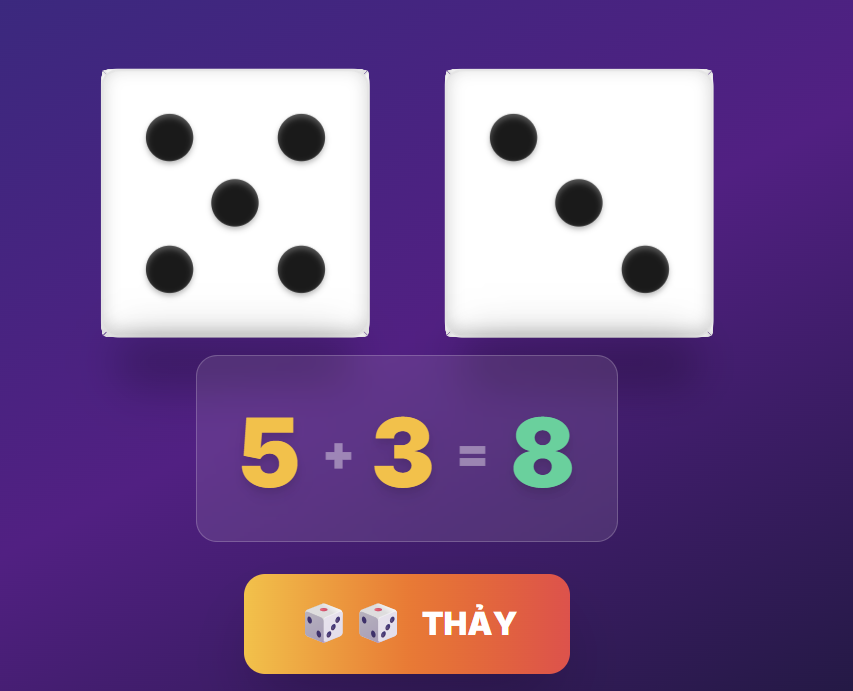
'Who'll solve this problem?' used to mean silence and downcast eyes. Now? Students lean forward, watching the 3D dice tumble on screen, holding their breath for the result. Number 5! Student number 5 walks confidently to the board—because 'the dice chose,' not the teacher.
'Who'll come solve this problem on the board?' The room went silent, eyes dropped to desks. A scene familiar to every teacher. But ever since I replaced that question with 'Let's see who the dice picks!' everything changed. Now the whole class watches eagerly as the 3D dice tumbles across the screen, breath held for the result. Number 5! Student number 5 confidently walks to the board—because 'the dice chose,' not me. This simple digital tool transformed my classroom dynamic.
Why Dice Feel 'Magical' in the Classroom
Dice have been used for thousands of years in games and decision-making. There's something deeply satisfying about watching a die tumble and land. In the classroom, this ancient tool—now digital—carries unique psychological power:
1. Absolute Fairness
- •Dice don't play favorites
- •Students trust the randomness
- •No one can say 'teacher picks on me'
- •Visible rolling process proves impartiality
2. Element of Surprise
- •Anticipation builds during the roll
- •Outcome genuinely unknown until landing
- •Shared suspense creates collective experience
- •Every roll is a mini-event
3. Familiar Yet Exciting
- •Students know dice from board games
- •The concept needs no explanation
- •Game associations make it feel fun, not formal
- •Natural engagement without instruction
The dice doesn't just select randomly—it creates a ritual. The rolling, the watching, the waiting, the reveal. These few seconds transform mundane selection into a shared moment of anticipation.
My Classroom Before Virtual Dice
For years, I used traditional methods to select students:
Method 1: Direct Calling
I'd call on students by name. Problems: Strong students got called constantly (they could answer), weak students hid successfully, and everyone suspected favoritism.
Method 2: Volunteering
I'd ask 'Who wants to answer?' Problems: Same three students always volunteered, shy students never raised hands, and I couldn't gauge class understanding.
Method 3: Paper Drawing
Names in a cup, draw randomly. Problems: Students suspected I looked before drawing, papers got lost or torn, and the process was anticlimactic.
None of these methods felt right. I needed something visibly fair, engaging, and quick. Enter the 3D dice.
Discovering Virtual Dice
I found online 3D dice while looking for math manipulatives. The dice could be customized—different numbers of sides, colors, and I could roll multiple dice at once. I realized: if I number my students 1-35, I can use dice to select them randomly.
The first time I projected the dice and clicked 'Roll,' something shifted. The dice tumbled realistically on screen, bouncing and spinning before settling. All eyes were glued to the projection. When it landed on 7, student number 7 actually smiled—she'd been 'chosen by fate,' not singled out by me.
How I Use 3D Dice in My Classroom
Use 1: Student Selection
Each student has a number (their roll number or assigned number 1-35). When I need someone at the board, I roll the dice. The matching student comes up. No arguments, no complaints—the dice decided.
Use 2: Random Problem Generation
For math practice, I use dice to generate problems: 'Roll two dice, multiply the numbers.' Students do the same problems with different numbers based on their rolls. Personalized practice, same skill.
Use 3: Group Formation
Roll dice to assign groups. Students who roll the same number form a team. Random grouping prevents cliques and encourages new collaborations.
Use 4: Quiz Question Selection
Instead of going through questions in order, roll dice to select which question we discuss next. Keeps students alert—they can't predict what's coming.
Use 5: Consequence/Reward Determination
When someone earns a consequence or reward, dice determine the specifics. Roll 1-3? Mild consequence. Roll 4-6? Moderate. The random element makes even consequences feel less personal.
| Purpose | Dice Configuration | Example | Benefit |
|---|---|---|---|
| Student selection | 2d20 or 1d36 | Roll 23 → Student #23 | Fair, visible selection |
| Math problems | 2d6 or 2d10 | Roll 4 and 7 → Solve 4×7 | Personalized practice |
| Group assignment | 1d6 colors | Roll red → Red team | Random mixing |
| Topic selection | 1d10 | Roll 3 → Topic #3 | Unpredictable review |
| Point awards | 1d6 or 2d6 | Roll 5 → 5 bonus points | Exciting rewards |
The Psychology Behind Dice Acceptance
Why do students accept dice decisions more readily than teacher decisions? Several psychological factors:
Perceived Neutrality
The dice has no agenda. It doesn't know who's prepared or unprepared, who's been called recently, or who's been avoiding participation. This perceived neutrality builds trust.
Visible Process
Everyone watches the dice roll. The result emerges from the process itself—not from a closed container or a teacher's decision. What students see is what students get.
Game Frame
Dice belong to games, not punishments. When selection feels like a game mechanic rather than a targeting system, students respond playfully rather than defensively.
Shared Fate
Everyone is equally subject to the dice. This shared vulnerability creates solidarity rather than isolation. 'We're all in this together' versus 'why did teacher pick me?'
Pro tip: Let students roll the dice occasionally. When they physically click 'Roll' (or press space), they feel even more invested in the outcome and can't blame the teacher for the result.
Creative Dice Configurations
Multiple Dice
Roll two dice and add them for a range of outcomes. This creates a bell curve—middle numbers are more likely. Use when you want weighted probability rather than equal chance.
Custom-Sided Dice
Online dice can have any number of sides—d10, d20, d36, d100. Match the dice to your class size or question count. Need to select from 28 students? Use a d30 and re-roll if over 28.
Symbol Dice
Some virtual dice show symbols instead of numbers—colors, shapes, emojis. Use for categorical decisions: activity type, group color, reward category.
Dice Chains
Roll one dice to determine which other dice to roll. Example: First roll selects the topic, second roll selects the student, third roll determines the point value. Layers of randomness create extended engagement.
Results in My Classroom
Quantifiable Changes
- •Zero complaints: No more 'why always me?' since implementing dice
- •100% participation: Every student has come to the board at least once per week
- •Increased preparation: Students prepare better knowing dice might select them
- •Faster transitions: Selection takes seconds, not minutes of negotiation
Qualitative Improvements
- •Classroom atmosphere is lighter—dice rolls become anticipated events
- •Shy students gradually became more comfortable with random selection
- •Trust increased—students believe the process is fair
- •Engagement improved throughout lessons, not just during rolls
Common Questions Addressed
'What if the same student gets selected repeatedly?'
True randomness can produce clusters. I use a simple system: after selection, that student's number is 'protected' for the next 2-3 rolls. If their number comes up, re-roll. This prevents unfair bunching while maintaining randomness.
'What about students who need accommodations?'
I adjust difficulty, not selection. If a student with accommodations is selected, they get an appropriately modified task. Everyone participates; tasks vary by need.
'Doesn't setting up dice take time?'
Initial setup takes 5 minutes—bookmarking a dice website and configuring settings. After that, each roll takes literally seconds. Far less time than traditional selection methods and their associated complaints.
'What if dice select an absent student?'
Simply re-roll. Some teachers maintain an 'active' list that excludes absent students. Either approach works—the re-roll actually adds a bonus moment of suspense.
Beyond Selection: Dice as Math Manipulatives
As a math teacher, I've found dice invaluable beyond random selection:
Probability Lessons
Roll dice hundreds of times (virtual dice track totals automatically). Compare expected vs. actual distributions. Students see probability theory come alive.
Mental Math Practice
Roll two dice, students call out the product. Fast, engaging, infinite variety. Change operations weekly: addition, subtraction, multiplication, even 'larger minus smaller.'
Place Value Understanding
Roll three dice: first is hundreds, second is tens, third is ones. Students construct numbers and compare. 'Who got the largest number?' 'The smallest?'
Game-Based Learning
Many math games use dice: race to 100, operation wars, fraction builders. The dice add excitement to mathematical practice.
Technical Setup
Requirements
- •Computer with internet access
- •Projector or large screen
- •Free online 3D dice tool
- •5 minutes for initial setup
Features to Look For
- •3D animation: Realistic tumbling increases engagement
- •Sound effects: Optional but adds to the experience
- •Customizable sides: Different dice for different purposes
- •Multiple dice: Roll several simultaneously
- •Roll history: Track previous results if needed
The Bigger Picture
The 3D dice transformed my classroom not because it's technologically sophisticated—it's actually quite simple. It worked because it changed the psychological frame around selection and participation.
When a student is 'chosen by the dice,' they're not being singled out by the teacher. They're experiencing random fate alongside their classmates. This shift—from 'teacher picks on me' to 'the dice landed on me'—changes everything about how students experience participation.
Every classroom has friction points: moments where students resist, argue, or disengage. Often, the solution isn't removing those moments but reframing them. The dice reframes selection from targeting to chance, from punishment to game, from isolation to shared experience.
The best teaching tools aren't always the most complex. Sometimes a simple dice—used thoughtfully—can transform classroom dynamics more effectively than expensive technology or elaborate systems.
Ready to transform classroom decisions into exciting moments? Try Sorokid Toolbox's free 3D Dice—realistic rolling, customizable sides, and designed for classroom use.
Roll the Dice