What is Soroban? The Complete Parent's Guide to Japanese Abacus for Kids (2026)
Discover what Soroban is and how the Japanese abacus transforms children's mental math abilities. A real parent shares 6 months of results, practical tips, and honest insights for families considering Soroban training.
I'll never forget the moment that changed everything. I was scrolling through YouTube when I stumbled upon a video of a 7-year-old girl solving five 3-digit addition problems—in her head—in under 10 seconds. No calculator. No paper. She simply closed her eyes, moved her fingers slightly in the air, and announced the correct answer. I literally said 'What?!' out loud. My 8-year-old was sitting next to me, still using his fingers to work out 47 + 38. That's when I discovered Soroban, and it's been a game-changer for our family.
Six months ago, I knew nothing about the Soroban—the Japanese abacus that's been quietly revolutionizing how children learn math around the world. Today, my son can calculate two-digit addition and subtraction problems in his head faster than I can type them into my phone. This article shares everything I've learned: what Soroban actually is, why it works so remarkably well, and the unfiltered truth about what it takes to see real results.
Whether you're a parent wondering if Soroban is worth the investment, a teacher exploring new math teaching methods, or simply curious about why Japanese students excel at mental arithmetic—this guide covers it all, based on real experience rather than marketing promises.
What is Soroban? Understanding the Japanese Abacus
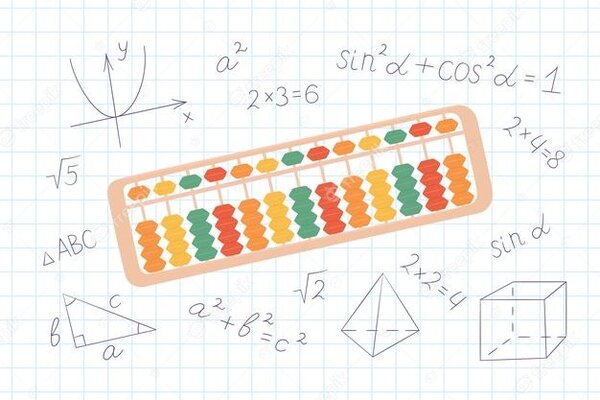
Soroban (そろばん) is the Japanese abacus—a centuries-old calculating tool that looks deceptively simple but works in extraordinarily sophisticated ways. Unlike the Chinese abacus (Suanpan) it evolved from, the Soroban was refined over generations specifically for speed and efficiency. Each column has exactly 5 beads: one 'heaven bead' above the dividing bar worth 5, and four 'earth beads' below, each worth 1.
This elegant design isn't random. The 1-4 bead system below and single bead above creates a perfect decimal representation that minimizes finger movements while maximizing calculation speed. Where the Chinese abacus has extra beads (2 above, 5 below), the Soroban strips away the unnecessary, leaving only what's essential for rapid computation.
How Does Soroban Work? The Basics Explained
At its core, Soroban teaches children to 'see' numbers differently. Instead of thinking of '7' as an abstract concept or a sequence (1, 2, 3... 7), children learn to recognize it instantly as a visual pattern: one heaven bead (5) plus two earth beads (2). This visual recognition is similar to how we immediately recognize a face without consciously cataloging each feature.
Each column represents a place value—ones, tens, hundreds, thousands, and beyond. To represent 47, you'd set up 4 in the tens column (four earth beads raised) and 7 in the ones column (one heaven bead plus two earth beads). Calculations happen by physically moving beads, following specific rules that eventually become automatic.
Here's how I explained it to my son: 'You know how you can look at a domino and instantly know it's showing six without counting each dot? That's what Soroban does with numbers—it turns math into pictures your brain can recognize instantly.'
The Science Behind Soroban: Why It Supercharges Mental Math
What makes Soroban truly remarkable isn't the physical abacus—it's what happens in the brain. After sufficient practice with the physical tool, children develop the ability to visualize an 'imaginary Soroban' in their mind. They can then manipulate these mental beads to perform calculations without any physical tool. This technique is called 'Anzan' (mental calculation), and it's why Soroban-trained children can perform seemingly impossible feats of mental arithmetic.
Neuroscience research explains why this works. Traditional arithmetic primarily engages the left brain—the analytical, sequential processing center. Soroban Anzan activates the right brain—the visual-spatial processing powerhouse—creating a two-hemisphere approach to mathematics. Brain imaging studies have shown that expert Soroban users display unique neural activation patterns, essentially creating new 'math pathways' in the brain.
Research-Backed Benefits of Soroban Training
- •Enhanced working memory – Visualizing and manipulating the mental abacus strengthens the brain's ability to hold and process information
- •Improved concentration – The focused attention required for bead manipulation transfers to other academic tasks
- •Faster processing speed – Pattern recognition becomes automatic, dramatically reducing calculation time
- •Greater numerical confidence – Children develop an intuitive 'feel' for numbers that reduces math anxiety
- •Cross-subject benefits – The cognitive skills developed through Soroban support learning in science, reading, and other areas
Why Japanese Children Excel at Mental Math
In Japan, Soroban isn't considered 'extra enrichment'—it's a fundamental part of childhood education. Many Japanese elementary schools still include Soroban instruction in their curriculum, and after-school Soroban programs are as common as soccer practice is in the United States. The Japanese Association of Soroban has administered proficiency tests since 1928, and achieving high-level certification (called 'dan' levels) is a source of genuine prestige.
This cultural investment in Soroban education explains why Japanese students consistently outperform their Western counterparts in mental mathematics. It's not genetic—it's methodological. And the good news? This method is completely learnable by children anywhere in the world, including right here at home.
Here's what surprised me most: Soroban isn't about creating child prodigies or putting pressure on kids. In Japan, it's seen as 'brain exercise'—something enjoyable that happens to make you smarter. My son now asks to do his Soroban practice. He actually thinks it's fun.
Our 6-Month Soroban Journey: A Real Parent's Experience
Let me be completely honest about how this started: I had no idea what I was doing. I didn't know Soroban from a calculator, and the thought of teaching my kid something I didn't understand was intimidating. Local Soroban centers charged $150-200 per month with inconvenient schedules. Online courses seemed passive and unengaging. I almost gave up before starting.
Then I found the Sorokid app, which promised to guide both parent and child through the learning process step-by-step. Skeptical but hopeful, we began our journey. Here's exactly what happened.
Weeks 1-8: The Foundation Phase
The first two months were slower than I expected—and that's okay. We started with the absolute basics: how to hold the Soroban, how to move beads correctly using thumb and index finger, and how to read single-digit numbers. My son learned to recognize 1-9 as visual patterns rather than counting sequences. We practiced just 10-15 minutes daily, never forcing it when he wasn't in the mood.
Honestly? During this phase, I wondered if we were wasting our time. He could already count to 100—why were we spending weeks learning to push beads around? But I'd read enough to know that this foundational period is crucial. You can't build mental arithmetic on a shaky foundation.
Weeks 9-16: Building Calculation Skills
Months three and four introduced actual arithmetic on the Soroban. Simple problems first: 3 + 2, 8 - 5, gradually building to problems requiring 'carrying' (using complement rules). This is where I noticed something counterintuitive: my son was actually SLOWER on the Soroban than his regular mental math for these simple problems.
I almost pulled the plug. What was the point of learning a 'faster' method that was slower? But the app's guidance reminded me that this temporary slowdown is normal and necessary. The child is building new neural pathways—essentially learning to walk before running. Pushing through this awkward phase is where most families give up, and where we almost did too.
Weeks 17-24: The Breakthrough
Month five was when the magic happened. Gradually, then suddenly, my son stopped needing to look at the physical Soroban for simpler problems. His eyes would drift up and to the right—the classic 'visualization' look—and his fingers would twitch slightly as he manipulated an imaginary abacus. Then he'd announce the answer. And he'd be right.
34 + 27? 'Sixty-one.' 56 - 18? 'Thirty-eight.' Problems that used to take him 15-20 seconds of finger-counting now took 3-4 seconds of mental visualization. The accuracy improved too—from getting maybe 6-7 out of 10 correct to 9 out of 10. By month six, he was tackling two-digit multiplication on the Soroban and starting Anzan (mental calculation) training in the app.
The proudest moment? When he came home from school and said, 'Mom, we did mental math problems in class and I finished first. My teacher asked how I did it so fast!' Whether or not that's entirely true, the confidence in his voice was worth every minute of practice.
Measurable Results After 6 Months of Soroban Training
I'm a numbers person (ironic, given my son's initial struggles), so I tracked his progress. Here's what changed over six months:
- •Calculation speed – Two-digit addition/subtraction dropped from 15-20 seconds to 3-5 seconds
- •Accuracy – Error rate decreased from 30-40% to under 10% for age-appropriate problems
- •Math confidence – Voluntary participation in class math activities increased dramatically
- •Focus and attention – Homework time decreased by approximately 25% across all subjects
- •Math grades – Improved from B-/C+ range to consistent A's and B+'s
- •Attitude toward math – From 'I hate math' to 'Math is actually kind of fun'
I want to be clear: my son is not a math prodigy now. He's not calculating five-digit numbers in his head like those YouTube kids (yet!). But he's gone from a child who dreaded math time to one who asks, 'Can we do some Soroban tonight?' That transformation is worth more than any test score.
Is Soroban Right for Your Child? Honest Assessment
Soroban isn't a magic solution for every child. After six months of experience and extensive research, here's my honest assessment of who benefits most—and who might want to consider alternatives.
Soroban Works Best For:
- •Visual learners – Children who think in pictures and spatial relationships often thrive with Soroban
- •Kids who struggle with traditional memorization – If multiplication tables just won't stick, Soroban's visual approach might be the answer
- •Children with math anxiety – The game-like, tactile nature of Soroban reduces the stress associated with 'doing math'
- •Active learners – Kids who need to move and do (rather than just listen) love manipulating the beads
- •Children ages 5-10 – This sweet spot offers enough cognitive development for understanding with maximum neuroplasticity for skill building
Consider Alternatives If:
- •You need immediate results – Soroban requires 3-6 months minimum investment before significant improvement
- •Your child strongly resists structured practice – Even 10 minutes daily of unwilling practice won't yield results
- •You can't commit to regular involvement – Parental engagement, especially in early stages, significantly impacts outcomes
- •Your child is over 12 – While older children can learn, they rarely achieve the same level of mental visualization mastery
Soroban vs. School Math: Will It Cause Confusion?
This was my biggest concern when we started. Would learning a different calculation method confuse my son when his teacher explained addition a certain way? After six months, I can confidently say: no, but only if you frame it correctly.
The key is presenting Soroban as 'another tool in the toolbox'—not a replacement for school methods. I told my son: 'You know how you can walk to school or ride your bike? Both get you there, right? Math is the same. The way your teacher shows you is one path. Soroban is another path. You get to choose which one to use.' He understood immediately.
In practice, children naturally use Soroban mental math for speed (quick calculations, timed tests) and school methods when they need to show their work. Rather than causing confusion, Soroban actually deepens mathematical understanding by providing multiple perspectives on how numbers work.
The Honest Downsides of Soroban Training
No educational method is perfect, and Soroban has genuine limitations that you should consider before starting.
1. The Time Investment is Real
You will not see results in one week. You probably won't see dramatic results in one month. The brain needs time to build new neural pathways for visual calculation. If you're looking for a quick fix for tomorrow's math test, Soroban isn't it. This is a long-term investment in your child's mathematical foundation.
2. Consistency Matters More Than Intensity
Ten minutes of daily practice beats one hour of weekend cramming every time. This means building Soroban into your daily routine—and maintaining that routine through busy periods, vacations, and 'I don't feel like it' days. For busy families, this consistent commitment can be challenging.
3. Parental Involvement is Non-Negotiable (Initially)
Even with the best app in the world, young children need a parent sitting nearby during practice—at least for the first few months. You don't need to understand Soroban perfectly, but you need to be present, encouraging, and ready to celebrate small wins. If you're hoping to hand your child a device and walk away, set different expectations.
I learned this the hard way. During a busy work week, I left my son to practice alone. His progress stalled completely. When I started sitting with him again—even just being present while checking emails nearby—his engagement and improvement resumed immediately.
What Age Should Children Start Learning Soroban?
Based on developmental research and practical experience, here's the age breakdown for optimal Soroban learning:
- •Ages 4-5 (Pre-K): Perfect for gentle introduction—playing with beads, learning numbers 1-9, building familiarity without formal instruction
- •Ages 6-7 (K-1st Grade): The ideal starting point for structured Soroban learning, matching cognitive development with maximum brain plasticity
- •Ages 8-10 (2nd-5th Grade): Excellent results are still achievable, often with faster initial progress due to existing number sense
- •Ages 11-12 (6th Grade): Can learn Soroban calculation effectively but may not develop full Anzan (mental visualization) mastery
- •Teens and Adults: Can learn to use Soroban as a calculation tool but rarely achieve the automatic mental visualization that younger learners develop
My son started at 8—not the 'ideal' starting age, but well within the effective window. He's developed solid Anzan skills and continues improving. Don't let 'perfect timing' prevent you from starting. The best time to plant a tree was 20 years ago; the second best time is today.
How to Learn Soroban: Comparing Your Options
There are several ways to introduce Soroban to your child. Each has advantages and drawbacks depending on your family's situation.
Option 1: Soroban Learning Centers
Traditional Soroban schools offer in-person instruction with certified teachers, peer learning environments, and structured curriculum. They're excellent for children who thrive on social learning and external accountability. However, they typically cost $100-250 per month, require driving to/from classes on fixed schedules, and may not be available in all areas.
Option 2: Online Video Courses
Pre-recorded video lessons offer flexibility and lower cost than in-person classes. Your child can learn at their own pace and replay difficult concepts. The downside: video courses are passive—children watch but may not actively practice enough. There's no feedback, no gamification, and maintaining engagement over months can be challenging.
Option 3: Soroban Learning Apps (Our Choice)
Modern Soroban apps like Sorokid combine structured curriculum with interactive practice and gamification. Children learn through doing rather than watching, earn rewards that maintain motivation, and practice with instant feedback on errors. Progress tracking lets parents monitor development without needing to understand Soroban themselves.
We chose the app route because it fit our family's reality: a working mom who can't commit to driving to classes, a child who responds to game-like rewards, and a budget that appreciated the lower cost compared to learning centers. Six months in, I'm convinced it was the right choice for us.
My recommendation: Start with a learning app that offers a free trial. You'll quickly discover if your child engages with Soroban-style learning. If they love it and want more advanced instruction, you can always add in-person classes later. Starting with the most expensive option before knowing if it's a good fit doesn't make sense.
Do You Need a Physical Soroban Abacus?
Short answer: It helps, but it's not strictly necessary. Here's the nuanced reality:
Modern apps like Sorokid include virtual Soroban that children manipulate on-screen. This works surprisingly well—the visual learning and bead-movement patterns translate effectively through touchscreens. Many children learn entirely through virtual practice and develop strong mental math skills.
That said, there's something valuable about tactile learning—physically feeling the beads click into place, developing muscle memory through real finger movements. If budget allows, I recommend having a physical Soroban available for early learning stages. They're inexpensive ($10-20 for a quality beginner model) and add a dimensional element that screens can't fully replicate.
Common Questions Parents Ask About Soroban
Will Soroban help with standardized tests?
Yes. Mental calculation speed directly benefits timed math sections on standardized tests. Children who can quickly verify answers or perform calculations mentally have more time for complex problem-solving questions.
How does Soroban compare to Kumon?
They're complementary rather than competing methods. Kumon emphasizes repetition and worksheet-based practice, building speed through massive exposure. Soroban builds a visual/spatial approach to numbers that creates fundamentally different (and often faster) mental processes. Some families use both.
Can children with learning differences benefit from Soroban?
Many parents report success with children who have ADHD, dyslexia, or dyscalculia. The multi-sensory, visual-spatial approach often helps children who struggle with traditional text-based math instruction. However, results vary individually, and consultation with educational specialists is recommended for children with diagnosed learning differences.
Final Verdict: Should Your Child Learn Soroban?
After six months of daily practice, countless 'aha!' moments, and watching my son transform from a math-anxious child into a confident mental calculator, here's my bottom line:
Soroban works. It's not magic, it's not instant, and it's not effortless—but it genuinely works. The Japanese have been developing and refining this method for centuries because it produces results. Modern apps have made it accessible to families anywhere, removing the barriers of expensive classes and specialized instruction.
If you can commit to 3-6 months of consistent practice, if you can spare 15 minutes daily to sit with your child, and if you're looking for a fundamentally different approach to building math skills—Soroban deserves serious consideration.
The worst case scenario? Your child gains exposure to a fascinating cultural tool and develops some basic visual-spatial skills. The best case? They develop a mental math superpower that serves them for life. In our family's experience, the investment was absolutely worth it.
Ready to discover if Soroban is right for your child? Sorokid offers a free trial with structured lessons, interactive practice, and progress tracking—everything you need to give Soroban a real try.
Sorokid helps your child master Soroban at home with a structured curriculum, virtual abacus, and fun gamified challenges. No prior Soroban knowledge required—parents can guide their children every step of the way.
Start Your Child's Free Soroban Trial