Animal Race Game: How a Digital Duck Race Transformed Student Selection in My Classroom
When calling students to the board used to mean groans and hiding, I knew something had to change. A simple animated animal race game—duck race—turned student selection from torture into the moment everyone waits for. Here's my journey from dreaded name-calling to exciting races.
'Please don't call on me!' That used to be the chorus every time I needed someone to come to the board. But now? 'Teacher, let me race! My duck is definitely going to win today!' I couldn't believe these were the same students. The only thing I changed was HOW I selected them—from calling names to racing ducks. This simple shift transformed my classroom dynamic entirely.
The Problem Every Teacher Knows
I teach 4th grade—35 students. Every class period, I need to call on students to come to the board, read aloud, solve problems, or answer questions. And here's what used to happen:
- •'I don't know yet!' — before I even asked the question
- •'Why do you always call on me?' — even though I'd only called them twice that week
- •'You're showing favoritism to Lily!' — because Lily raises her hand
- •Strong students were exhausted from being called constantly
- •Struggling students disappeared because nobody noticed them
My Attempts at Fair Selection
I tried paper drawing—names in a cup, pull one out randomly. Here's what happened:
- •'You looked first!' — students suspected I chose deliberately
- •Papers got torn, lost, needed constant rewriting
- •Boring — draw and done, no engagement
- •Students still cried when selected
- •No excitement, just dread postponed
The problem wasn't HOW I chose students—it was that being chosen felt like punishment. Any selection method would fail until I changed that fundamental association.
Discovering the Animal Race
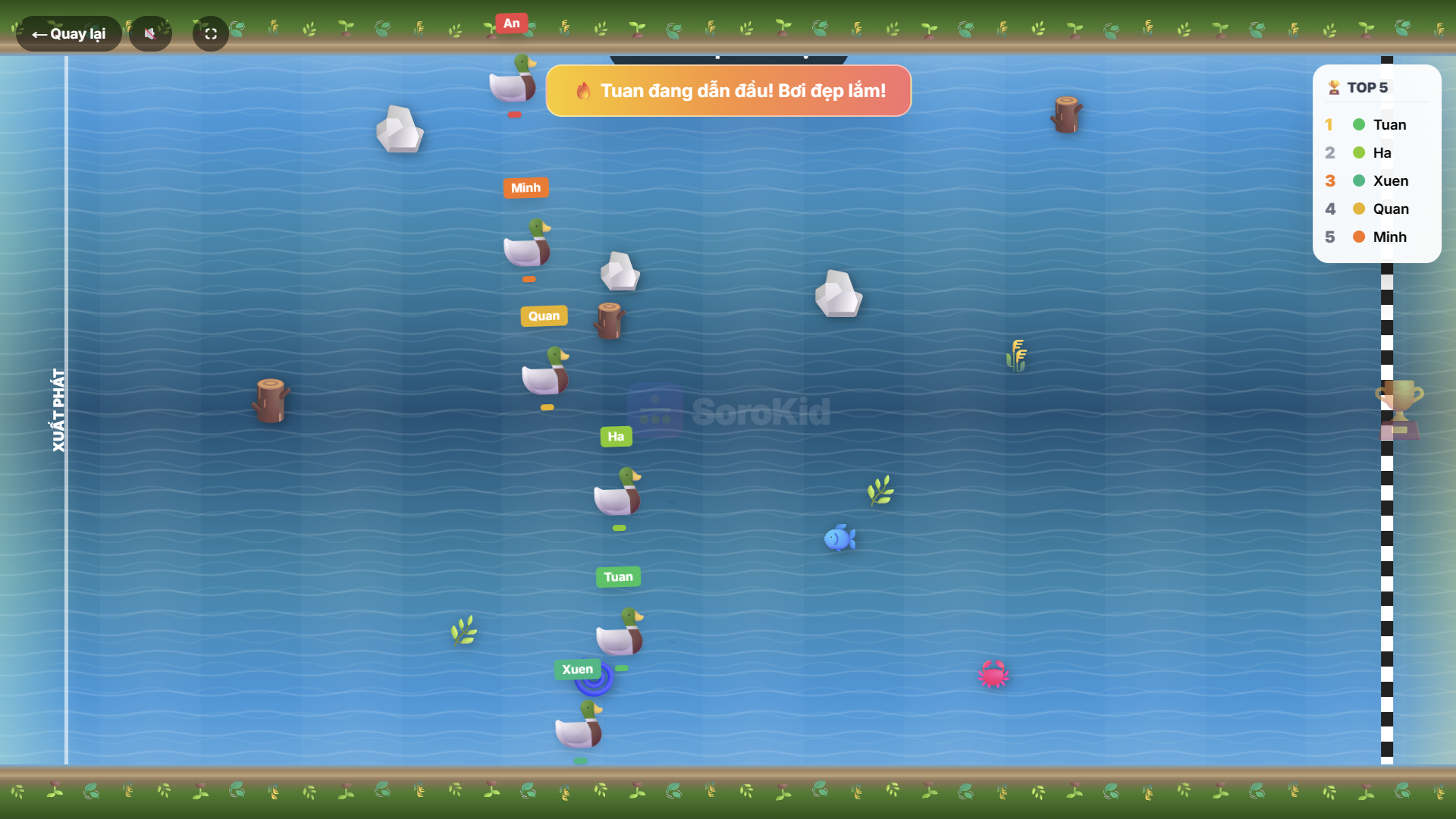
I found the duck race game by accident while browsing classroom tools online. It was designed as a random picker, but instead of just displaying a name, it showed animated animals racing across the screen. The winner's name would be selected.
My first thought was 'cute but gimmicky.' My second thought, after using it once, was 'why didn't I find this years ago?'
The Magic Moment
The first time I projected the race on the whiteboard, the classroom went silent. Colorful ducks lined up at the starting line. I clicked 'Start.' The ducks began racing—some fast, some slow, some stopping, some sprinting ahead.
Students were leaning forward, cheering, laughing. 'Go yellow duck!' 'My duck is winning!' When a duck crossed the finish line and a name appeared, there was applause—not groans. The selected student walked to the board smiling.
That student wasn't 'called on by teacher.' They were 'chosen by the winning duck.' The psychological shift was enormous.
Why Animal Races Work Better Than Other Random Pickers
1. The Anticipation Period
Unlike a wheel or name picker that gives results in 2 seconds, a race takes 15-30 seconds. This anticipation period is where the magic happens:
- •Students invest emotionally in 'their' animal
- •Tension builds and releases naturally
- •Everyone is engaged for the full duration
- •The result feels earned, not arbitrary
2. Emotional Attachment to Characters
Students quickly adopt favorite animals. 'The red duck always wins!' 'My turtle is slow but steady!' This personification transforms cold selection into friendly competition.
3. Visible Fairness
Everyone watches the race. Everyone sees that outcomes are random. No student can claim 'teacher picked me on purpose.' The race is the decision-maker, and it's visibly impartial.
4. Wins Feel Like Wins
When your duck wins the race, you're a winner—even if 'winning' means coming to the board to solve a problem. The framing completely changes. Instead of being singled out, you've triumphed in competition.
| Aspect | Traditional Methods | Animal Race |
|---|---|---|
| Student reaction | Dread, avoidance | Excitement, anticipation |
| Perceived fairness | Suspicious of bias | Visibly random |
| Engagement | Only selected student | Entire class participates |
| Duration | Instant (no buildup) | 15-30 seconds of engagement |
| Emotional framing | Being punished | Winning a race |
| Repeat usage | Becomes routine, boring | Stays exciting |
How I Use the Animal Race in My Classroom
Use 1: Calling Students to the Board
The most common use. Instead of 'Who wants to solve this problem?' (only confident students) or calling a specific name (feels targeted), I say 'Let's race to see who gets this one!'
Use 2: Group Presentation Order
For group projects, the race determines which group presents first. Groups cheer for their assigned animal. Going first no longer feels like punishment—it's victory.
Use 3: Quiz Respondent Selection
During review games, the race picks who answers. Students actually want to be picked because they've 'won' the opportunity. The competitive framing changes everything.
Use 4: Special Privilege Distribution
Who gets to be line leader? Who distributes materials? Who chooses the break time activity? The race makes these tiny decisions feel like exciting events.
Use 5: Behavior Rewards
At the end of the week, well-behaved students enter a 'reward race.' Winners get small prizes. But even non-winners enjoyed the race—participation itself is fun.
Pro tip: Let students choose their animal at the start of the year. When students 'own' a specific character, they're more emotionally invested in every race. 'My penguin has a good chance today!'
Results I've Observed
Immediate Changes
- •Zero complaints about being selected
- •Increased willingness to come to the board
- •More engagement during instruction (anticipating potential selection)
- •Reduced anxiety around participation
- •Genuine excitement multiple times per class
Long-Term Improvements
- •Shy students gradually became more comfortable being 'in the spotlight'
- •Class participation increased overall—even students hoping to be selected
- •Behavior improved as students stayed engaged throughout lessons
- •Classroom atmosphere became more playful and positive
- •Students began preparing better, 'just in case' they were picked
Parent Feedback
Several parents told me their children now talked about school differently. 'Mom, my duck won today and I answered correctly!' Instead of 'The teacher called on me,' it's 'I won the race.' Small shift, big psychological difference.
Common Questions and Concerns
'Doesn't this waste class time?'
Each race takes 15-30 seconds. Compare that to the time spent convincing reluctant students to come to the board, dealing with complaints, managing tears, or handling fairness arguments. The race actually saves time by eliminating resistance.
'What if the same student gets picked repeatedly?'
Most race tools have 'remove winner' options. Once selected, that name is removed from future races until everyone has had a turn. This ensures fair distribution while maintaining the excitement of randomness.
'Doesn't the novelty wear off?'
I've been using the race for over a year. Students still get excited. The anticipation of watching a race never gets old—it's why horse racing and sports remain popular forever. The format itself is inherently engaging.
'What about students who still don't want to be selected?'
There will always be anxious students. But the race helps: being selected by random chance is less personally threatening than being chosen by the teacher. Over time, positive experiences with being selected reduce anxiety.
Setting Up for Success
Technical Requirements
- •Computer with internet connection
- •Projector or large screen visible to all students
- •Speakers for sound effects (optional but enhances experience)
- •Pre-entered student names or numbers
Introduction to Students
I explained the race system on day one: 'From now on, when I need someone to come to the board, we'll have a race! Watch—the winning animal's owner gets to answer. It's completely random and fair.'
Then I ran a demo race. Students immediately understood and got excited. No lengthy explanation needed—the visual speaks for itself.
Establishing Norms
- •Cheer for your animal, don't boo others: Keep competition friendly
- •Winners accept gracefully: No excessive gloating
- •Everyone will get turns: Randomness balances over time
- •Quick transitions: After the race, winner goes directly to task
Variations and Creative Uses
Team Races
Assign animals to teams instead of individuals. Team members share the excitement of their animal racing. Losing teams aren't singled out—they lost as a group, which feels less personal.
Reward Races
End-of-week races where only students who met certain criteria participate. The race becomes the reward, not just the selection method.
Prediction Games
Before the race, students predict the winner. Correct predictions earn points. This adds another layer of engagement without changing the core functionality.
The Bigger Lesson
The duck race taught me something important about teaching: small changes in framing can produce massive changes in student experience. The selection itself didn't change—it was still random. What changed was the journey from 'question' to 'selected student.'
We turned a moment of dread into a moment of excitement. We transformed being singled out into winning a competition. We made the arbitrary feel earned.
Every classroom has moments of friction—transitions, selections, decisions that students resist. Often, the solution isn't eliminating those moments but reframing them. The duck race is one example. I'm always looking for more.
Teaching isn't just about content—it's about experience. When students enjoy the process of learning, they learn better. Sometimes that means racing animated ducks. Whatever works.
Ready to transform student selection in your classroom? Try Sorokid Toolbox's free Animal Race game—customizable, colorful, and designed to make every selection exciting.
Start a Race