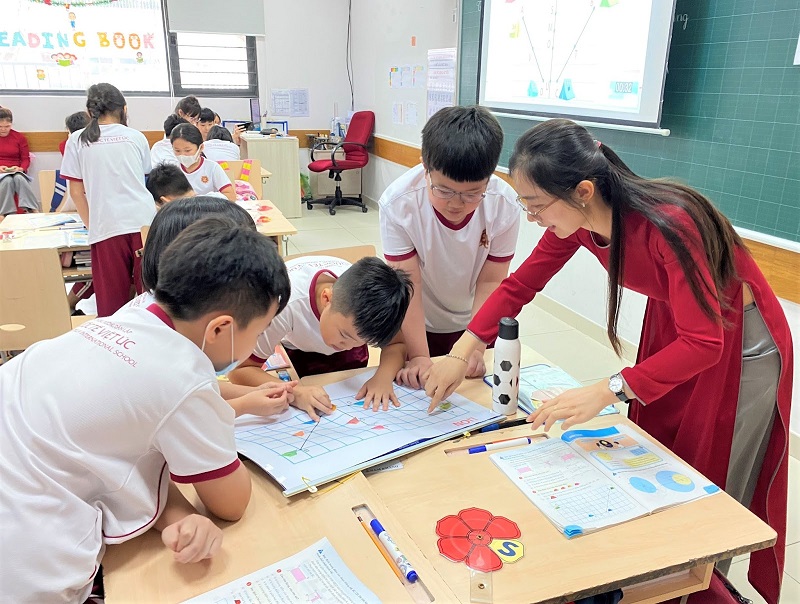
How Active Learning Transformed My Classroom: A Teacher's Journey from Lectures to Engagement
For 10 years I taught the traditional way: I lectured, students copied, everyone passed tests. Then I realized my students were physically present but mentally absent. Here's how shifting to active learning changed everything—and why I'll never go back to lecturing.
For my first decade of teaching, I believed I was excellent at my job. Students sat quietly, took notes diligently, and passed their exams. Parents didn't complain. Administrators commended my classroom management. I could lecture for 45 minutes straight, covering every concept comprehensively, explaining clearly. Then one day I asked my students a simple question about material I'd taught the previous week—and received blank stares from almost everyone. That moment shattered my confidence and started a journey that completely transformed how I teach. Here's my honest story of moving from traditional lecturing to active learning, including the failures, the resistance, and ultimately, the breakthrough that made me never want to return to my old methods.
The Way I Used to Teach
Like most teachers trained in traditional systems, I followed a predictable pattern: I stood at the front. I explained concepts. Students listened. Students copied from the board. Students did practice problems. I checked answers. Repeat for 15 years.
My lessons were well-prepared. My explanations were clear. My board work was organized. By every conventional measure, I was a good teacher. Students passed exams. The curriculum was covered. What more could be expected?
| Time | Teacher Activity | Student Activity | Actual Learning? |
|---|---|---|---|
| 0-5 min | Take attendance, settle class | Wait, chat | None |
| 5-20 min | Explain new concept | Listen, copy | Maybe some? |
| 20-30 min | More explanation, examples | Listen, copy more | Declining attention |
| 30-40 min | Assign practice problems | Work silently | Varies widely |
| 40-45 min | Check some answers | Wait to leave | Minimal |
The Moment That Changed Everything
The awakening came during a review lesson. I'd taught solving equations the previous week—beautiful, clear explanations with step-by-step demonstrations. Students had nodded along, taken notes, passed the quiz. Now, one week later, I asked them to solve a similar problem.
Silence. Blank stares. Thirty-five students who had apparently learned nothing permanent. I was stunned. I'd taught this! They'd passed the quiz! How could they have forgotten so completely?
That evening I couldn't sleep. I kept asking myself: If students forget everything within a week, what's the point of teaching? What was I actually accomplishing in those 45-minute lectures?
The painful truth I finally accepted: Students weren't learning during my lectures. They were copying. They were temporarily memorizing for quizzes. But nothing was sticking long-term. Listening is not learning. Copying is not understanding.
Discovering Active Learning
Research led me to active learning: an approach where students participate, engage, and construct understanding rather than passively receiving information. The core principle is simple but revolutionary: people learn by doing, not by watching someone else do.
What Active Learning Actually Means
- •Students talk more than the teacher—discussion, explanation, questioning
- •Students do things—solve, create, analyze, not just copy
- •Students interact—with each other, with problems, with ideas
- •Teacher facilitates—guides, questions, supports rather than lectures
- •Assessment is continuous—understanding checked constantly, not just at test time
The Research Behind It
Studies consistently show active learning improves retention by 25-50% compared to traditional lectures. The 'learning pyramid' suggests we remember 5% of what we hear in lectures but 75% of what we practice doing. My students' blank stares suddenly made scientific sense—they'd been hearing, not doing.
My First Attempts (And Failures)
Eager to transform, I jumped into active learning methods the very next week. The results were... not what I expected.
Failure 1: Chaos Instead of Discussion
I told students to 'discuss the problem with your neighbor.' Within seconds, my classroom became a social hour. Students talked about everything except math. I couldn't hear myself think. I ended the 'discussion' after two minutes and went back to lecturing.
Failure 2: Silent Groups
I assigned group problem-solving. One student in each group did all the work while others copied. When I asked the 'copiers' to explain, they couldn't. The active students were frustrated at doing all the work. Nobody was happy.
Failure 3: Student Resistance
'Just tell us the answer, teacher.' 'This is confusing.' 'I prefer when you explain.' Students who'd been trained for 10+ years in passive learning didn't know how to learn actively. They wanted me to pour knowledge into them, not help them construct it themselves.
Important lesson: Active learning isn't just 'stop lecturing.' It requires structure, scaffolding, and gradual transition. Students need to be taught how to learn actively—it's not natural after years of passive education.
What Actually Worked: Structured Active Learning
After my failures, I studied active learning implementation more carefully. I learned that successful active learning requires structure—not just 'talk amongst yourselves' but specific frameworks that guide productive engagement.
Strategy 1: Think-Pair-Share with Clear Protocols
Instead of 'discuss with your neighbor,' I implemented Think-Pair-Share with explicit instructions: Think individually (30 seconds, silent). Pair with one neighbor (1 minute, focused question). Share one pair's answer with class (selected by me). The structure prevented chaos while enabling discussion.
Strategy 2: Individual Accountability in Groups
For group work, I added individual accountability: each group member had a specific role, and I could call on anyone to explain the group's work. Knowing anyone might be asked prevented freeloading—every student had to understand, not just copy.
Strategy 3: Mini-Lectures with Active Breaks
I didn't eliminate lecturing entirely—sometimes direct instruction is necessary. But I limited lectures to 10-minute chunks, followed by active processing: a quick problem, a peer explanation, a prediction. This kept attention fresh and forced students to engage with material immediately.
Strategy 4: Exit Tickets for Feedback
At lesson end, every student writes one thing they learned and one question they still have. This takes 2 minutes but provides invaluable feedback—I know immediately what succeeded and what confused them. I address common confusions the next day.
| Time | Teacher Activity | Student Activity | Learning Check |
|---|---|---|---|
| 0-3 min | Hook question or puzzle | Think, engage, respond | Check prior knowledge |
| 3-13 min | Mini-lecture, key concept | Listen actively, anticipate | Pause for questions |
| 13-20 min | Pose problem, facilitate | Think-Pair-Share | Listen to discussions |
| 20-30 min | Circulate, support | Group problem-solving | Check each group |
| 30-40 min | Facilitate sharing | Present, explain, question | Address misconceptions |
| 40-45 min | Summarize, connect | Exit ticket reflection | Gather feedback |
The Results After One Year
After one full year of structured active learning, I compared outcomes to my previous lecture-based teaching. The differences were dramatic.
Retention Improved Dramatically
The review-lesson shock that started my journey? Gone. Students now remember material weeks later because they've actively worked with it, not just heard about it. Concepts they've discussed, solved, and explained to peers stick in ways that my beautiful lectures never achieved.
Engagement Became Visible
In my lecture days, I couldn't tell who was learning and who was daydreaming. Now engagement is visible—students are talking, solving, explaining. I can see confusion happening and address it immediately, not discover it on the test.
Students Became Independent
Perhaps most surprising: students became better at learning independently. The skills they developed—discussing ideas, explaining thinking, checking understanding—transferred beyond my classroom. They were learning how to learn.
The transformation I'm proudest of: Students now ask questions. In my lecture years, the same 3-4 students asked questions while everyone else sat silently. Now half the class asks questions because they've developed the habit of active engagement.
Tools That Made Active Learning Manageable
Active learning requires more dynamic classroom management than lecturing. Several digital tools made the transition manageable:
- •Random name pickers: For selecting students to share, eliminating bias and keeping everyone alert
- •Digital timers: Visible countdown for timed activities, creating urgency and structure
- •Group randomizers: For creating diverse groups quickly without negotiation chaos
- •Quick polling tools: For checking whole-class understanding in seconds
- •Exit ticket systems: For collecting student reflections efficiently
Challenges I Still Face
Active learning isn't perfect, and I won't pretend the transition was entirely smooth. Ongoing challenges include:
Challenge 1: Time Pressure
Active learning takes more time than lecturing. I cover less content per lesson. This requires careful curriculum prioritization—teaching fewer things more deeply rather than covering everything superficially.
Challenge 2: Inconsistent Participation
Some students still try to hide. Random selection helps, but truly disengaged students find ways to participate minimally. Active learning helps most students but doesn't magically fix all motivational issues.
Challenge 3: Preparation Time
Planning active learning lessons takes more preparation than planning lectures. I need to design activities, anticipate difficulties, prepare materials. The workload is higher, especially initially.
Advice for Teachers Considering the Shift
- •Start small: Don't transform everything overnight. Add one active element per lesson first.
- •Structure carefully: Free-form 'discussion' fails. Provide explicit protocols and time limits.
- •Expect resistance: Students conditioned to passive learning will push back initially. Persist.
- •Use tools: Digital helpers (timers, pickers, group makers) reduce chaos and save energy.
- •Accept imperfection: Early attempts will feel messy. That's normal. Keep refining.
- •Measure differently: Don't just count content covered—check what students actually retained.
Why I'll Never Go Back
After two years of active learning, I occasionally feel tempted to lecture—it's easier, faster, less chaotic. Then I remember those blank stares when I asked about material I'd 'taught' the previous week. I remember students who sat through years of my classes without learning to think mathematically.
Active learning is harder for me. But it's better for students. They remember more. They engage more. They think more. They become learners, not just listeners. That's why I'll never go back to standing at the front, talking for 45 minutes, while minds wander and nothing sticks.
If you're a teacher considering this shift, know that it's worth the difficulty. The first few months feel messy and uncertain. Then something clicks, and you see your students genuinely learning—actively constructing understanding rather than passively copying notes. That moment makes all the struggle worthwhile.
Ready to bring more engagement to your classroom? Sorokid Toolbox offers free interactive tools for teachers—random pickers, timers, group makers, and more to make active learning manageable.
Explore Teacher Tools