My Child Finishes Last on Math Tests – Causes and 6 Ways to Improve Speed
The whole class turns in their test, but your child is still working. 4 scientific reasons why kids are slow at math (not because they're dumb), and 6 steps to help them speed up without losing accuracy.
"Mom, I wasn't done but the teacher collected the papers." My daughter came home deflated. I asked what score she got, but she didn't know – several questions were left blank. I used to worry: Is something wrong with her? Why can everyone else finish but not her? But after 3 months of research and practice, I understood: the problem wasn't HER.
Slower Than Classmates – Is My Child Behind?
I observed my daughter doing homework at home. She DOES know how to do the problems. She just does them... SLOWLY.
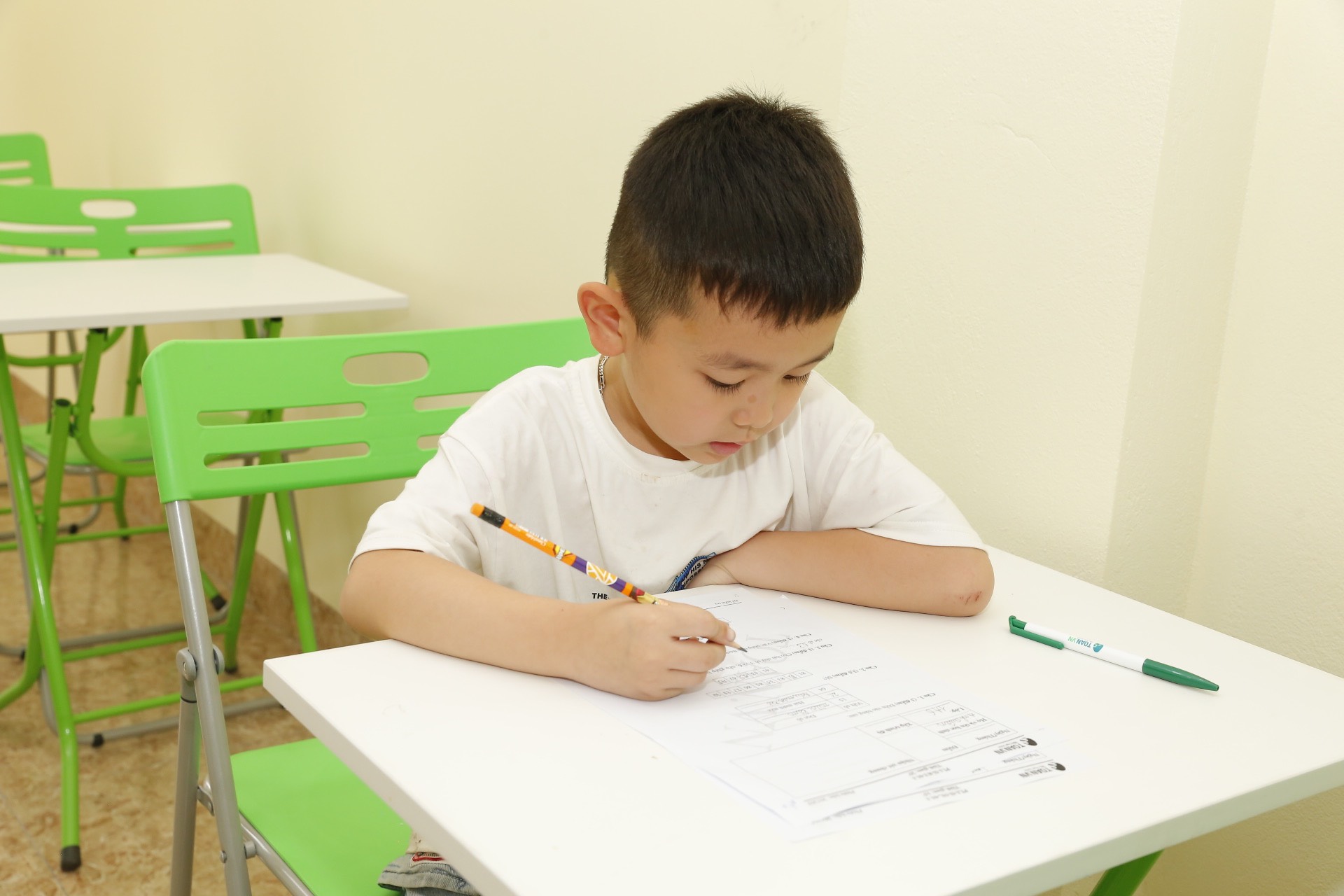
She holds the pencil and thinks for a long time. Counts and recounts. Writes then erases. Checks again. Every step is careful. And because she's careful, it takes time.
Working SLOW ≠ Being DUMB. Some kids work fast because they're used to it. Others work slow because they're careful and haven't built 'automatic reflexes' yet.
The Science: Why Some Kids Work Slower
Processing Speed – How Fast the Brain Handles Information
Processing speed is one of the measures in IQ assessments. It measures how quickly the brain processes simple information – NOT related to intelligence or understanding ability.
Some children have lower processing speed than average – not because they're less capable, but because their brains are wired differently. These kids understand well, get answers right, but NEED TIME.
Math Fluency – Automatic Recall of Math Facts
Math fluency is the ability to answer basic calculations quickly and accurately WITHOUT THINKING. For example: '7 × 8 = 56' – answered immediately, no counting.
Kids lacking math fluency have to CALCULATE each operation (count, add up) instead of instantly REMEMBERING the result. Losing 3-5 extra seconds per problem × 20 problems = 1-2 minutes.
4 Reasons Why Kids Are Slow
| Cause | Signs | Solution |
|---|---|---|
| Haven't memorized Math Facts | Counts on fingers, recounts multiple times | Practice flashcards, Sorokid 5 min/day |
| Fear of mistakes → constant checking | Reads answer 2-3 times after writing | Reduce pressure on grades, accept some errors |
| Slow reading comprehension | Reads problem multiple times to understand | Practice expressive reading, underline keywords |
| Slow handwriting | Takes long to hold pencil, fears messy writing | Allow scratch work, reduce neat writing requirements |
5 Mistakes Parents Often Make
- •Comparing to classmates: 'Why is Timmy so fast while you're not?' → Child feels worse, works even slower
- •Constant rushing: 'Hurry up! Time's almost up!' → Child panics, loses focus, makes more mistakes
- •Demanding 100% accuracy: Child fears mistakes → keeps checking → runs out of time → doesn't finish
- •Assigning more practice problems: Thinking more = faster. But if done wrong, more practice is useless
- •Not understanding the root cause: Not knowing if child is slow due to math facts or fear, so not addressing the actual issue
6 Steps to Help Your Child Speed Up
Step 1: Identify the Main Cause
Observe your child working for 15 minutes and note:
- •Which calculations does your child pause at? (hasn't memorized math facts)
- •How many times do they recheck? (fear of mistakes)
- •How long do they spend reading the problem? (slow reading comprehension)
- •Do they write quickly or slowly? (handwriting skills)
Step 2: Practice Math Facts Until Reflexive
If your child can't 'speak it as they write it' with times tables, this is priority #1.
- •Use flashcards: 5 min/day, random questions
- •Use Sorokid: Gamified, kids WANT to practice
- •Goal: Answer within 2 seconds, no counting
Step 3: Practice with Time Limits
Don't push for speed immediately. Gradually reduce time:
| Week | Problems | Time | Goal |
|---|---|---|---|
| 1 | 10 problems | 20 min | Get used to it, no pressure |
| 2 | 10 problems | 15 min | Start building time awareness |
| 3 | 10 problems | 12 min | Slight speed increase |
| 4 | 10 problems | 10 min | Reach classroom pace |
Step 4: Teach Test-Taking Strategies
- •Skim the whole test first: Spend first 30 seconds seeing what's hard/easy
- •Do easy questions first: Secure the 'sure' points first
- •30-Second Rule: Think 30 seconds, no answer → mark it, skip it, come back later
- •Don't check during the test: Finish everything, THEN check (if time allows)
Step 5: Reduce Fear of Making Mistakes
Say to your child:
- •'Getting 80% because you finished is BETTER than 50% because you ran out of time'
- •'Missing 1-2 questions is okay. What matters is completing the test'
- •'This one test doesn't define who you are'
When kids are less afraid, they stop rechecking obsessively, and speed naturally improves.
Step 6: Talk to the Teacher
Communicate so the teacher understands: your child is trying hard, not lazy or incapable. The teacher can:
- •Give your child an extra 5-10 minutes (if policy allows)
- •Encourage instead of rush
- •Avoid comparing your child to classmates in front of the class
Sample 4-Week Practice Schedule
| Day | Activity | Time |
|---|---|---|
| Mon-Fri Morning | Practice math facts (Sorokid/flashcards) | 5 min |
| Mon-Fri Evening | Do 10 problems with timer | 15→10 min |
| Saturday | Practice test like at school | 20 min |
| Sunday | Rest or play math games | Free |
Results After 3 Months
My daughter isn't the fastest in class now. But:
- •She finishes ON TIME (used to leave 2-3 questions blank)
- •She's no longer afraid of tests
- •She knows strategies: easy questions first, hard ones later
- •She's more confident – and when confident, she naturally works faster
Fast or slow isn't as important as whether your child is CONFIDENT. A confident child will gradually improve. A fearful child will only get slower.
Sorokid helps kids practice mental math through games – with timers and gradually increasing difficulty, so they get used to speed without pressure.
Try Free Practice