Student-Centered Learning: Moving Beyond the Buzzword to Real Classroom Practice
A veteran teacher's practical guide to implementing genuine student-centered learning. From theory to specific classroom strategies, tools, and lesson structures that actually work.
"Student-centered learning"—I first heard this phrase in my teacher preparation program over a decade ago. It sounded wonderful in theory: students actively constructing knowledge, teachers as facilitators rather than lecturers, personalized learning paths. But when I stepped into my first classroom, I realized I had no idea how to actually DO it. For years, I confused asking more questions with student-centered teaching, when really I was still the center of every lesson. It took years of experimentation, failure, and gradual refinement before I understood what student-centered learning truly means—and more importantly, how to implement it with practical, specific strategies. This guide shares everything I've learned.
What I Got Wrong About Student-Centered Learning
In my early teaching years, I thought I was being student-centered because I asked lots of questions. 'Who knows the answer?' 'Can anyone tell me?' 'What do you think?' My lessons were peppered with questions—but I was still the one doing most of the cognitive work. I decided which questions to ask, I evaluated responses as right or wrong, I moved the lesson forward at my pace. Students responded to me; they didn't interact with each other or direct their own learning.
True student-centered learning isn't about asking more questions. It's about fundamentally restructuring who does the thinking, who makes decisions, and who drives the learning process.
Key Insight: Student-centered learning shifts the cognitive load from teacher to students. It's not about the teacher working less—it's about students working more (and more deeply).
Teacher-Centered vs. Student-Centered: The Real Differences
Understanding the contrast helped me see what needed to change:
| Dimension | Teacher-Centered | Student-Centered |
|---|---|---|
| Who talks most? | Teacher delivers content | Students discuss, explain, question |
| Who asks questions? | Teacher asks, students answer | Students generate and investigate questions |
| Who makes decisions? | Teacher determines all activities | Students have meaningful choices |
| What's the pace? | Same for all students | Differentiated by need |
| What's the goal? | Cover the curriculum | Deep understanding and skill development |
| How is success measured? | Right answers | Process, growth, and understanding |
| Where does knowledge come from? | Transmitted from teacher | Constructed by students with guidance |
The Five Pillars of Student-Centered Practice
Through trial and error, I've identified five essential elements that make learning genuinely student-centered:
Pillar 1: Student Voice and Choice
Students need meaningful opportunities to make decisions about their learning. This doesn't mean chaos—it means structured choices within clear boundaries. In my math class, students might choose which practice problems to tackle, what method to use, or how to demonstrate their understanding. The learning goal is non-negotiable; the path to get there has flexibility.
Pillar 2: Active Engagement
Students must DO something with the content, not just receive it. This means discussion, problem-solving, creating, explaining, questioning—mental activity that requires processing information rather than passively absorbing it.
Pillar 3: Collaboration
Learning happens through interaction. Students learn from each other, not just from the teacher. Structured collaboration—think-pair-share, group problem-solving, peer teaching—multiplies learning opportunities and develops social skills alongside academic ones.
Pillar 4: Differentiation
True student-centeredness acknowledges that students have different needs, paces, and strengths. Instruction adapts to students rather than forcing students to adapt to one-size-fits-all teaching.
Pillar 5: Metacognition
Students reflect on their own learning: What do I understand? What confuses me? What strategies work for me? This self-awareness develops independent learners who can guide their own growth.
Practical Strategies I Use Daily
Theory is nice, but teachers need specific techniques. Here are the strategies that transformed my classroom:
Strategy 1: Think-Pair-Share
Instead of asking questions to the whole class (where only a few students engage), I pose a question, give individual thinking time (1-2 minutes), have students discuss with a partner (2-3 minutes), then share selected ideas with the class. This ensures ALL students process the question, not just the quick responders.
Strategy 2: Jigsaw Learning
For content-heavy lessons, I divide material into sections. Expert groups each master one section, then return to home groups to teach each other. Every student becomes a teacher, and the responsibility for learning shifts from me to them.
Strategy 3: Learning Stations
I set up multiple activities around the room addressing the same learning goal in different ways. Students rotate through stations, choosing their pace and sometimes their path. This differentiates automatically and keeps me free to support individuals.
Strategy 4: Student-Generated Questions
Rather than me asking all the questions, students generate questions about the topic. We categorize them, investigate them together, and students often teach each other the answers they discover. Questions drive the lesson rather than my predetermined script.
Strategy 5: Gallery Walks
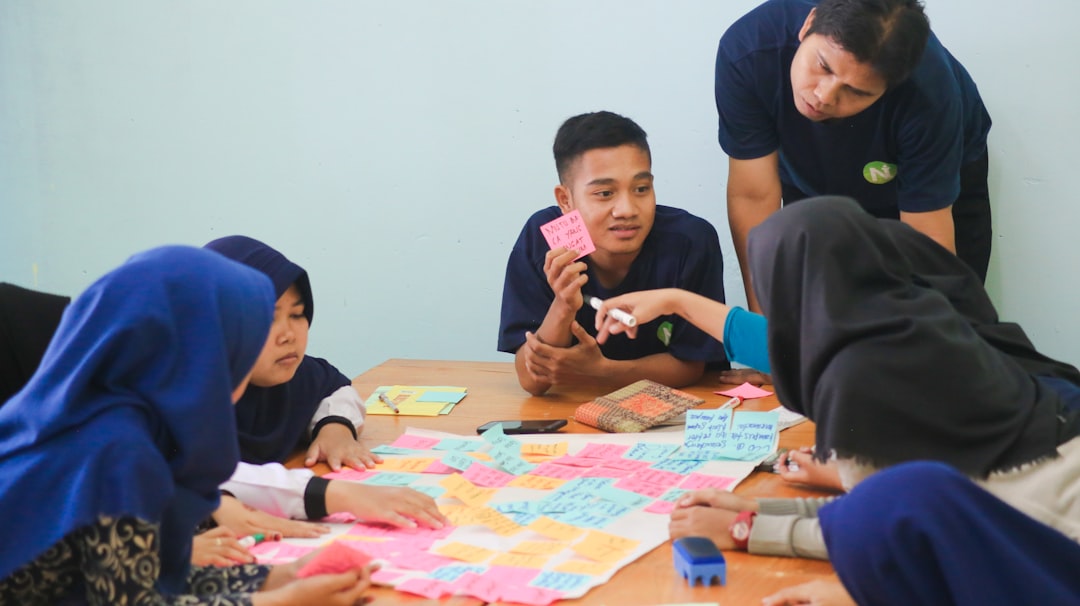
Students create work products (solutions, diagrams, explanations) displayed around the room. The class walks through the 'gallery,' observing, questioning, and learning from each other's work. Feedback comes from peers, not just me.
Strategy 6: Exit Tickets With Choice
End-of-lesson reflection where students choose how to demonstrate understanding: explain in words, draw a diagram, create an example, or identify what they still wonder about. This honors different learning styles and gives me formative data.
Using Technology as a Student-Centered Tool
Technology can either reinforce teacher-centered instruction (digital worksheets) or genuinely support student-centered learning. The key is how it's used, not the technology itself.
- •Apps that adapt to student level (like Sorokid) differentiate automatically
- •Tools that allow student creation (not just consumption) support voice and choice
- •Collaboration platforms enable peer learning beyond physical proximity
- •Self-paced digital resources let students control their learning speed
- •Immediate feedback tools shift evaluation from teacher to system
I use Sorokid specifically because it creates individualized challenge—each student works at their own level, progresses at their own pace, and receives immediate feedback without waiting for me. This frees me to facilitate deeper learning conversations while the app handles routine skill practice.
A Sample Student-Centered Math Lesson
Let me walk through what a student-centered math lesson actually looks like in my classroom:
Topic: Multi-digit addition with regrouping
- •Hook (5 min): Present a real problem: 'The school library has 247 books and just received a donation of 185 books. How many total?' Students estimate first, then discuss estimation strategies with partners.
- •Exploration (15 min): Students work in pairs to solve the problem using ANY method they can devise. I provide base-ten blocks, number lines, and blank paper. I circulate, observe, and ask probing questions but don't teach the algorithm yet.
- •Gallery Share (10 min): Pairs post their solutions. Class does a gallery walk, noting different strategies. Students identify similarities and differences between approaches.
- •Discussion (10 min): Together, we analyze which strategies are efficient and why. Students explain their thinking; I facilitate connections to the standard algorithm but don't position it as 'the right way.'
- •Practice (15 min): Students choose from three practice options at different challenge levels. They can also choose to work alone or with a partner. I conference with students who need support.
- •Reflection (5 min): Exit ticket with choice: explain the regrouping concept in your own words, show an example with your work, or write one thing you're still wondering about.
Notice: I talked for maybe 10 minutes total. Students were actively engaged—thinking, discussing, creating, choosing—for 50 minutes.
Common Mistakes and How to Avoid Them
In my journey toward student-centered teaching, I made many mistakes. Here's what to watch for:
| Mistake | Why It Happens | Better Approach |
|---|---|---|
| All choice, no structure | Wanting to give students freedom | Clear boundaries with choice within them |
| Group work without accountability | Hoping collaboration 'just happens' | Structured roles and individual accountability |
| Confusing activity with learning | Wanting engaged-looking students | Focus on learning goals, not just doing things |
| Abandoning direct instruction entirely | Overcorrecting from traditional teaching | Strategic direct instruction when efficient |
| Same activity for all students | Easier to plan | Tiered activities or student choice |
| Not scaffolding independence | Expecting instant self-direction | Gradually release responsibility |
Building Toward Student-Centered Practice
You don't have to transform everything at once. I recommend a gradual approach:
- •Week 1-2: Start with one think-pair-share per lesson. Get comfortable with the technique.
- •Week 3-4: Add student choice in one area (practice problems, seating, method).
- •Week 5-6: Introduce one collaborative structure (jigsaw, gallery walk).
- •Week 7-8: Build in regular reflection and metacognition prompts.
- •Ongoing: Gradually increase student decision-making and decrease teacher talk time.
Addressing Common Concerns
"I have to cover the curriculum—there's no time for this."
Student-centered learning often covers content more efficiently because students are actually learning, not just being exposed. Time spent 're-teaching' decreases when initial instruction goes deeper. And covering content students don't learn isn't really covering it.
"My students can't handle this freedom."
Students need to learn self-direction—it's a skill, not a trait. Start with highly structured choices and gradually increase freedom as students demonstrate readiness. They'll grow into it.
"How do I assess student-centered learning?"
Observation, discussion, student work products, and reflection all provide assessment data. You'll actually know MORE about student understanding through active engagement than through quiet worksheet completion.
The Transformation in My Classroom
After years of refining student-centered practices, my classroom looks completely different from my early years. I talk less and students talk more. I'm often not the center of attention—students are working with each other, making decisions, explaining their thinking. My role has shifted from performer to coach, from source of knowledge to facilitator of discovery.
The results speak for themselves: higher engagement, deeper understanding, better retention, and students who see themselves as capable learners rather than passive recipients. Student-centered learning isn't just nicer—it's more effective.
Remember: Student-centered learning isn't about the teacher doing less. It's about designing experiences where students do more—more thinking, more talking, more deciding, more reflecting. That's where real learning happens.
Looking for technology that supports student-centered math learning? Sorokid adapts to each student's level, providing differentiated practice that frees you to facilitate deeper learning.
Explore Sorokid