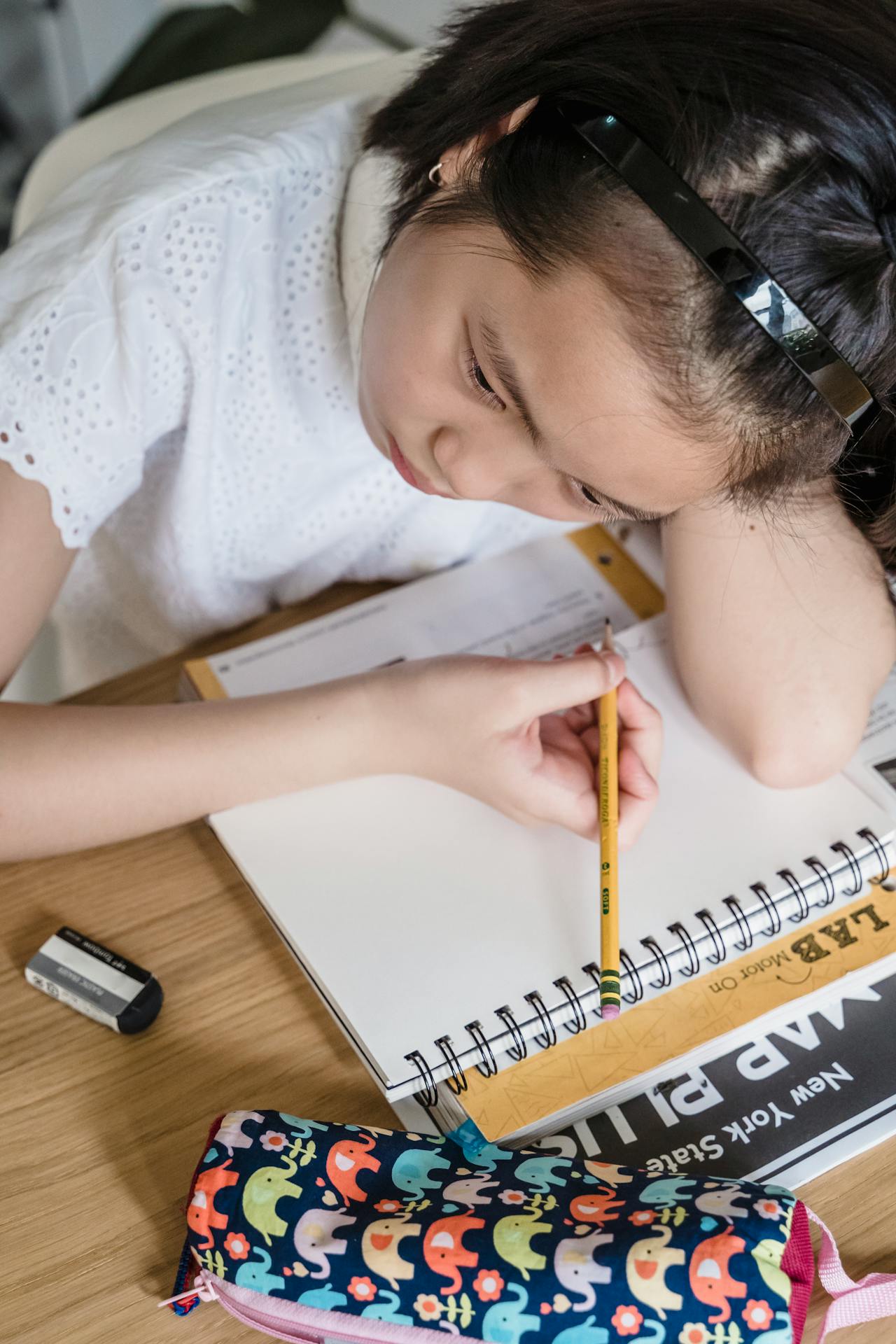
My Child Is Afraid of Math: What Did I Accidentally Do Wrong?
I used to think my son feared math because he was bad at it. Then I looked at what I'd been saying. Sometimes the problem isn't the child—it's what we're unintentionally teaching them to feel.
One evening my son said, 'I hate math.' I asked why. He didn't answer, just looked down. I was frustrated. But lying awake that night, I started replaying our homework sessions in my head. The sighs. The 'this is so easy, why don't you get it?' The disappointment in my voice. I realized with a sinking feeling: maybe I was part of the problem.
The Signs I Missed
I used to think my son was just lazy about math. But when I started paying closer attention, I noticed patterns:
- •Every time we opened the math workbook, his face changed—tense, unhappy
- •He'd say 'I don't know' before even reading the problem
- •He worked incredibly slowly, as if delaying the inevitable
- •Sometimes he cried before I even said anything critical
- •He'd suddenly need to use the bathroom when math time started
This wasn't laziness. This was fear.
What Had I Been Saying?
I recorded myself during one homework session. What I heard horrified me:
- •'This is basic stuff. You should know this by now.'
- •'Your sister got this on the first try.'
- •*Heavy sigh* when he made a mistake
- •'If you paid attention in class, this would be easy.'
- •'Wrong again. Come on, focus!'
I thought I was being motivating. I was being crushing.
Research shows that parents who express math anxiety—or frustration—can transfer those feelings to children. Kids are incredibly attuned to our emotional states, even when we think we're hiding them.
How Parents Accidentally Create Math Anxiety
1. Comparing to Siblings or Peers
'Your brother understood this immediately.' Even said gently, this message is: 'You're failing where others succeed.' It creates shame, not motivation.
2. Expressing Our Own Math Discomfort
'I was terrible at math too.' We think we're being sympathetic. Kids hear: 'Math is hard, even for adults. You're doomed.' Research shows parental math anxiety is contagious.
3. Showing Disappointment at Mistakes
A sigh, a frown, an exasperated tone—kids notice everything. When mistakes are met with disappointment, they learn that errors are bad, not learning opportunities.
4. Rushing or Impatience
'Hurry up, we don't have all day.' When kids feel rushed, anxiety increases. Anxiety impairs working memory—exactly what you need for math. It becomes a self-fulfilling prophecy.
5. Making Math High-Stakes
'If you don't learn this, you'll fail the test.' 'Math is important for your future.' True, but pressure increases anxiety. Anxious kids perform worse, confirming their fears.
What I Changed
Change 1: Separating Worth from Performance
I started saying explicitly: 'Getting math problems wrong doesn't make you bad at math. Everyone makes mistakes while learning. I love you whether you get this right or not.'
Change 2: Celebrating Effort, Not Just Answers
'I love how you tried three different approaches.' 'You stuck with it even when it was hard—that's what matters.' Effort praise builds persistence; outcome praise builds anxiety.
Change 3: Making Mistakes Normal
I started sharing my own mistakes: 'I got confused here too. Let's figure it out together.' When kids see adults make and recover from errors, mistakes feel less catastrophic.
Change 4: Removing Time Pressure
'Take as long as you need.' No clock-watching, no sighing at slowness. Removing time pressure reduced visible anxiety immediately.
Change 5: Stepping Back from Teaching
I realized I couldn't be both 'loving mom' and 'math teacher' effectively. I let apps do the instruction and positioned myself as cheerleader, not corrector.
The Slow Recovery
Math anxiety doesn't disappear overnight. Healing took months:
- •Week 1-2: Still flinching when math came up
- •Week 3-4: Started attempting problems without prompting
- •Month 2: Stopped saying 'I can't' before trying
- •Month 3: Asked me a math question voluntarily (!)
- •Month 4: Described math as 'okay' instead of 'hate'
The turning point: He came home excited about solving a problem in class. 'Mom, I got it before everyone else!' I almost cried. Not because he was fast, but because he felt proud instead of afraid.
Signs Your Child May Have Math Anxiety
- •Physical symptoms: stomachaches, headaches before math
- •Avoidance: 'forgetting' homework, bathroom trips, distractions
- •Negative self-talk: 'I'm stupid,' 'I can't do math'
- •Giving up quickly or refusing to try
- •Panic or tears when facing math problems
- •Performance much worse than apparent understanding
When to Seek Professional Help
- •Anxiety is severe: panic attacks, school refusal
- •Self-esteem is significantly affected
- •Progress isn't happening despite supportive approaches
- •You suspect learning differences (dyscalculia, ADHD)
- •Your own anxiety is affecting your ability to help
A Message to Parents Recognizing Themselves
If you're reading this and feeling guilty, I understand. I felt terrible when I realized my role in my son's math fear. But guilt isn't productive—action is.
You didn't mean to create anxiety. You were trying to help your child succeed. Now that you know better, you can do better. Kids are resilient. The fact that you're reading this means you care enough to change.
Frequently Asked Questions
Can math anxiety be completely overcome?
Yes, but it takes time and consistent positive experiences. The brain can rewire its emotional associations with math through repeated non-threatening exposure. Be patient—healing isn't linear.
My child is already behind. Won't pressure help them catch up?
Pressure increases anxiety, which impairs the working memory needed for math. Anxious kids learn slower, not faster. Reducing pressure actually accelerates learning in the long run.
What if I have math anxiety myself?
Try not to express it to your child. Let apps or tutors handle instruction so you don't transfer your own discomfort. Consider working on your own math confidence alongside your child—it's never too late to change your relationship with math.
Help your child build positive math associations. Sorokid uses games, visual soroban methods, and encouraging feedback to make math feel safe and even fun. No pressure, no judgment—just progress at their own pace.
Start Free Trial