My Third Grader Still Counts on Fingers: I Was So Worried I Asked Everyone—Here's What I Learned
When your 8-year-old still relies on finger counting while classmates calculate mentally, worry sets in. A mother's quest for answers from teachers, doctors, and experts reveals surprising truths about finger counting and mental math development.
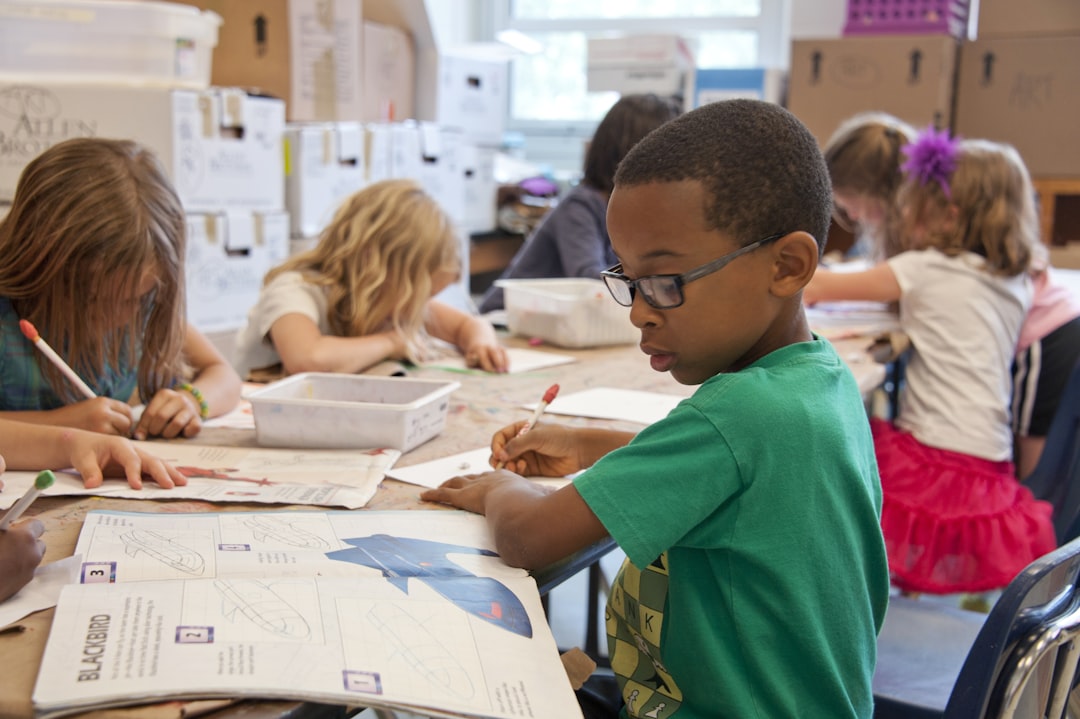
Third grade math homework: 47 + 28. I watched my 8-year-old son slowly spread out his fingers, counting one by one under the desk, trying to hide what he was doing. I glanced at his friend's paper—the answer was already written, no fingers in sight. My heart sank. Wasn't finger counting something kids were supposed to outgrow by now? I was so worried that I embarked on a quest for answers, asking his teacher, our pediatrician, a learning specialist, and even Google in the middle of the night. What I discovered challenged my assumptions and ultimately helped me support my son in a way that actually worked.
The Moment That Triggered My Panic
It wasn't just that my son counted on his fingers—it was the way he tried to hide it. He'd curl his fingers under the desk, count quietly, then quickly write his answer as if he'd known it all along. That shame told me this wasn't just a math issue; it was becoming an emotional one. He knew he was 'supposed' to have outgrown this, and he felt deficient because he hadn't.
I started observing more carefully. For simple problems within 10, he usually knew the answers. But anything requiring carrying or borrowing, anything with larger numbers, anything even slightly complex—out came the fingers. And the calculations took time, lots of time, while other kids seemed to produce answers instantly.
What His Teacher Said
My first stop was his third-grade teacher, Mrs. Patterson. I was nervous, expecting to hear something was wrong with my son. Instead, she offered reassurance mixed with practical insight:
"Your son doesn't have any learning problems, Mrs. Lee. He understands math concepts well—he can explain his thinking, he sets up problems correctly, and he gets the right answers. What he hasn't developed yet are efficient mental calculation strategies. He's still using the most basic strategy—counting—because he hasn't internalized more efficient ones. This is about building number sense and mental math skills, not about intelligence or ability."
Teacher's Insight: "Finger counting isn't wrong—it's a valid calculation method. The concern is when it's the ONLY method a child has, because it becomes a bottleneck as math gets more complex."
What the Pediatrician Said
Still worried there might be an underlying issue, I mentioned my concerns at our next pediatric checkup. Dr. Chen asked a few questions about my son's overall development, school performance, and whether there were other academic concerns. Then she explained:
"Finger counting at age 8 is more common than you might think and isn't automatically a sign of a learning disability. What would concern me is if he couldn't count accurately, couldn't understand what numbers mean, or showed significant struggles across multiple academic areas. From what you're describing, this sounds like a strategy preference that needs intervention, not a developmental disorder."
She did recommend we watch for signs of dyscalculia—a math-specific learning disability—but noted that persistent finger counting alone isn't diagnostic. She suggested working with his teacher and possibly a math specialist if progress wasn't made.
What the Learning Specialist Revealed
The most illuminating conversation was with Dr. Karen Walsh, a learning specialist I found through our school district. She explained the cognitive science behind finger counting in a way that finally made everything click:
- •Finger counting is a concrete strategy—it makes abstract numbers physical and countable
- •All children use concrete strategies before developing abstract mental strategies
- •Some children naturally transition to mental strategies; others need explicit instruction
- •The transition isn't about age—it's about having alternative strategies to use
- •If a child has ONLY concrete strategies, they'll use them regardless of age
- •You can't just remove finger counting; you have to replace it with something better
Why Some Children Stay Dependent on Fingers
Dr. Walsh explained several reasons why children like my son remain finger-dependent longer than peers:
| Reason | Explanation | Solution |
|---|---|---|
| Never taught alternatives | School focuses on getting right answers, not efficient methods | Explicitly teach mental math strategies |
| Fingers always worked | If a strategy works, why change it? | Show that faster methods exist and are learnable |
| Weak number sense | Doesn't 'see' number relationships mentally | Build number sense through visual/spatial tools |
| Visual-spatial learner | Needs to see/touch to understand | Provide visual calculation tools like Soroban |
| Math anxiety | Stress causes regression to 'safe' strategies | Reduce pressure while building new skills |
| Lack of fact fluency | Doesn't have basic facts memorized | Build automaticity with addition/subtraction facts |
The Problem With Just Telling Kids to Stop
I'll admit—my first instinct was to simply tell my son to stop using his fingers. 'Just do it in your head!' I'd say with frustration. This approach backfired spectacularly.
Without alternative strategies, removing finger counting just left him stuck. He'd sit there, unable to calculate, growing more anxious by the second. It was like telling someone to drive somewhere but taking away their car without providing another vehicle. You can't remove a functional strategy without replacing it with something else.
Critical Mistake: Telling children to 'stop counting on fingers' without teaching alternative strategies creates anxiety and helplessness, not mental math ability.
The Strategy That Actually Worked: Visual Mental Tools
Dr. Walsh recommended introducing visual mental calculation tools—ways to 'see' numbers in the mind without using physical fingers. This is where we discovered Soroban and the Sorokid app, and it was a turning point.
Soroban (Japanese abacus) works because it provides a visual structure for numbers that can eventually be imagined mentally. Instead of counting individual units (like fingers), children learn to visualize quantities as bead positions. With practice, they can 'see' these beads in their mind and manipulate them without any physical tool.
Why Soroban Worked for My Son
- •It gave him something VISUAL to replace finger counting (not just 'think harder')
- •The structure is simple: 5-bead groups that map to how our number system works
- •He started with physical beads, then gradually visualized them mentally
- •It felt like a new skill to learn, not a deficiency to fix
- •The Sorokid app made practice feel like a game, not remediation
- •Progress was visible and encouraging—he could see himself improving
Other Strategies We Used Alongside
Soroban wasn't our only intervention. We also worked on building number sense and fact fluency through multiple approaches:
1. Number Bonds and Part-Part-Whole Thinking
We practiced seeing numbers as composed of parts: 8 is 5+3, or 4+4, or 6+2. This gave him mental anchors for calculation instead of counting from 1 every time.
2. Making Tens Strategy
For addition, we practiced making tens: 8+5 becomes 8+2+3 = 10+3 = 13. This strategy uses number sense instead of counting.
3. Doubles and Near-Doubles
Memorizing doubles (6+6=12, 7+7=14) provides anchors. Near-doubles like 6+7 become 'double 6 plus 1' = 13.
4. Counting On (Not From One)
Instead of counting everything, we practiced starting from the larger number: for 3+8, start at 8 and count 9, 10, 11. This cut counting in half.
The Timeline of Progress
Change didn't happen overnight. Here's what our journey looked like:
| Timeframe | Progress | What Helped |
|---|---|---|
| Month 1 | Still used fingers but began learning Soroban basics | Daily 10-minute Sorokid app sessions |
| Month 2 | Could use Soroban for simple problems, fingers for complex | Continued app use plus number bond games |
| Month 3 | Began visualizing Soroban without physical tool for easy problems | Mental visualization exercises |
| Month 4 | Reduced finger use by ~50%, faster calculations | Confidence building, less pressure at home |
| Month 6 | Minimal finger use, primarily for checking complex work | Integration of all strategies |
What I Wish I'd Known Earlier
Looking back, several insights would have saved me worry and helped my son sooner:
- •Finger counting isn't shameful—it's a valid mathematical strategy
- •The goal isn't to eliminate finger counting but to add better strategies
- •Some children need explicit instruction in mental math strategies; they don't just 'figure it out'
- •Visual-spatial tools like Soroban can provide the mental scaffolding some children need
- •Pressure and shame make things worse, not better
- •Progress is gradual—expecting overnight change creates disappointment
- •My son's intelligence was never the issue; his strategy toolkit was
Signs of Underlying Issues vs. Strategy Gaps
Through my research, I learned to distinguish between strategy gaps (what my son had) and genuine learning disabilities (which require professional intervention):
| Strategy Gap Signs | Potential Learning Disability Signs |
|---|---|
| Gets correct answers, just slowly | Consistently gets wrong answers despite effort |
| Understands concepts when explained | Can't grasp basic number concepts |
| Can learn new strategies with instruction | New strategies don't stick despite repeated teaching |
| Improves with targeted practice | Little improvement despite intervention |
| Math-specific issue only | Difficulties across multiple academic areas |
| Can count accurately | Makes counting errors frequently |
Important: If you suspect a learning disability, seek professional evaluation. But don't assume persistent finger counting alone indicates a disability—it's often a strategy gap that responds well to intervention.
One Year Later: Where My Son Is Now
Today, my son is in fourth grade. He rarely uses fingers for calculation—not because I told him to stop, but because he has better tools. His Soroban mental visualization has become automatic for most problems. He still occasionally uses fingers for particularly complex calculations, and I've stopped caring. His math grades have improved, but more importantly, his confidence has soared. He no longer hides his hands under the desk. He no longer feels ashamed.
The journey from panic to understanding taught me that our children's development rarely follows the straight path we expect. Sometimes what looks like a problem is actually just a different path that needs appropriate support.
Final Thought: The goal was never to take something away from my son (finger counting). It was to give him something more (mental calculation tools). That shift in perspective changed everything.
Help your child develop mental math skills that naturally replace finger counting. Sorokid's Soroban-based approach gives children a visual calculation method they can use in their mind.
Start Free Trial